





Anal Cancer and HPV
What is Anal Cancer?
Anal cancer is a rare type of cancer that starts in the tissues of the anus. The anus is the space at the end of the rectum where feces exit the body. Anal cancer begins from the cells covering the outer surface of the anus. Bleeding, itching, pain and a feeling of mass in the anus area are the most common symptoms of this type of cancer. Medical evaluation is necessary to make an accurate diagnosis because these symptoms can be confused with more common and often less serious diseases such as hemorrhoids.
HPV infection is an important risk factor in its development. HPV is a sexually transmitted virus andanal canceris found in most cases. Smoking, weak immune system, high number of sexual partners and anal sex increase the risk of anal cancer.
Article Summary
Anal cancer is a rare type of cancer that starts in the tissues of the anus. The anus is the space at the end of the rectum where feces exit the body.
What Will You Find in This Article?
- What is Anal Cancer?:This section explains basic information on the subject, the evaluation process and points to consider.
- What are the symptoms of Anal Cancer?:This section explains basic information on the subject, the evaluation process and points to consider.
- What are the Types of Anal Cancer?:This section explains basic information on the subject, the evaluation process and points to consider.
- How is Anal Cancer Diagnosed?:This section explains basic information on the subject, the evaluation process and points to consider.
There are different anal cancer treatment options depending on the stage and spread of the cancer. Anal cancer detected in the early stages can usually be treated with surgery. In more advanced stages, treatments such as radiotherapy and chemotherapy may be used. Early diagnosis significantly increases the success of treatment. Therefore, it is very important for people who experience long-lasting anal discomfort to see a doctor and have the necessary tests done.
What are the Symptoms of Anal Cancer?
If it is seen in people, some symptoms also appear. Generally ahorseshoe cancer symptomsWhen examined, it is seen that it gives its findings early. Therefore, if you have rectal bleeding, you should see a doctor as soon as possible. Here are the symptoms of anal cancer:
In cervical screening, Pap smear and HPV-based tests help detect precancerous cellular changes at an early stage [1][3].
“Correct follow-up regarding Anal Cancer and HPV is to evaluate the test result not alone, but together with examination findings, risk factors and personalized control plan.”
-
This type of cancer has some symptoms other than bleeding.
-
Swelling in the anus
-
Feeling a mass in the anus
-
Recurrent or persistent itching in the anus
-
Straining, difficulty defecating
-
Thin stool, rectal discharge
-
Swelling of lymph nodes in the anal and groin area
If you have such complaints, you should see a doctor as soon as possible. There are some other risk factors. If you carry these, you are more likely to get anal cancer. These are basically as follows:
-
advancing age
-
cigarette consumption
-
suppression of the immune system
-
Those with HIV
-
Those with chronic local inflammation
-
pelvic radiation
-
anal warts
In addition, having anal intercourse also increases risk factors. Although this type of cancer will not be completely prevented, the risk factors can be reduced. If these are taken into consideration, it is possible to lower it. Using a condom before sexual intercourse is among them.
What are the Types of Anal Cancer?
There are many types. The main lines are seen in anal cancer as follows;
Screening frequency and follow-up plan; should be determined based on age, HPV status, previous test results, and personal risk factors [2][3].
If you are wondering about the details regarding this subjectSmear TestYou can review our article.
-
Melanoma: It is a type of skin cancer and begins in the cells that produce melanin pigment in the anal lining or skin.
-
Basal cell carcinoma: This type of cancer accounts for some of the anal cancers. On the other hand, it can also manifest itself in the skin around the anus.
-
Adenocarcinoma: It begins in the cells that form the upper part of the anus or in the mucus-producing glands located under the anal lining.
-
Cloacogenic Carcinoma: It is a subtype of squamous and affects the cloaca region located in the anus. It causes about 25 percent of cases.
-
Squamous: It is also known as squamous cell carcinoma and is among the most common types of anal cancers. It begins in the flat cells covering the lower region of the anus.
It is not only seen in heterosexuals. in homosexualsanal cancerIt can manifest itself in any of these types. There are different stages and they are as follows;
-
Stage One: The tumor is 2 cm or less in diameter.
-
Second Stage: Tumor diameter is larger than 2 cm.
-
Stage 3A: In this stage, anal cancer has spread to nearby organs, including the bladder, urethra, or vagina.
-
Stage 3B: It has spread to neighboring organs and lymph nodes. Likewise, it can spread to the lymph nodes in the pelvis.
-
Stage Four: It can spread to distant areas such as the liver, brain or lungs.
It is important to make early diagnosis in order for the treatment to give the desired result. Generally, the answer to the question "Is there any treatment for anal cancer?" is yes. However, diagnosis and diagnosis must be made quickly and applied by specialist physicians.
How Is Anal Cancer Diagnosed?
People who experience symptoms of anal cancer, such as bleeding, pain, itching, or a mass in the anus area, should visit their doctor. It will begin after the patient's physical examination and medical history are reviewed by the doctor. During the physical examination, the doctor examines the rectum and anus. The purpose of this examination is for the doctor to determine if there is an abnormal mass or swelling inside the anus.
An abnormal test result alone does not mean cancer; Depending on the type of result, repeat testing, colposcopy, or close follow-up may be required [2].
To look at the issue from a broader perspectiveWhat is HPV Vaccine?You can review our article.
A procedure known as anoscopy may be performed in cases that require a more comprehensive examination. In this procedure, the anus and lower rectum are examined using an anoscope, a short, lighted tube. With this method, the doctor can better see the abnormal tissues in the area.
If the doctor suspects cancer, a biopsy should be performed. A small tissue sample is sent to the laboratory and examined under a microscope during a biopsy. This research is done to determine whether the cells are cancerous. Biopsy results are very important to make a definitive diagnosis of anal cancer.
Once the diagnosis is confirmed, more tests may be needed to determine the stage of the cancer. These tests include imaging techniques such as MRI, CT scans, and PET scans. These tests help find out whether the cancer has spread to other parts of the body.
What Causes Anal Cancer?
Anal cancer may develop when various risk factors combine. HPV (Human Papilloma Virus) infection is one of the most common causes. HPV is a sexually transmitted virus and accounts for the majority of anal cancer cases. High-risk types of HPV can cause abnormal changes in cells, which can contribute to the development of cancer.
In HPV-related cases, vaccination, screening and follow-up examination are considered as preventive health steps that complement each other [1][3].
Another important factor that increases your risk is smoking. Harmful chemicals found in cigarette smoke can damage DNA in cells and initiate the development of cancer. Smokers can weaken their immune systems, making it harder for the body to fight infections such as HPV.
If the immune system is weak, the risk of anal cancer may also increase. Immunosuppressive medications after organ transplantation or diseases that weaken the immune system, such as HIV, can reduce the body's ability to fight cancerous cells. This may encourage cancer development.
Sexual lifestyle may also affect the risk of anal cancer. Anal sex can damage the anal area and lead to infections such as HPV. Having multiple sexual partners is more likely to spread HPV and other sexually transmitted diseases.
Gender and age are also among the risk factors. Anal cancer is more common in people aged 50 and over. The likelihood of developing it is slightly higher in women than in men, but this difference is not very pronounced.
Genetic factors and familial predisposition may also play a role in its development. The risk may be slightly higher in people with a genetic history of this or other types of cancer.
How is Anal Cancer Treated?
Treatment is usually carried out with a multidisciplinary approach and is carried out in collaboration with specialists such as surgeons, oncologists and radiologists. Surgical intervention is usually the preferred option in cases of anal cancer diagnosed at an early stage. A procedure known as local excision may remove some of the tumor and surrounding healthy tissue, depending on the size and location of the tumor. In later stages, more extensive surgical interventions such as abdominoperineal resection may be required. In such operations, a permanent colostomy can be opened and part or all of the anus and rectum can be removed.
Radiotherapy is used to kill cancer cells with high-energy rays. This medication is often used together with chemotherapy. Radiotherapy can help with smaller tumors and more effective surgical interventions. It can also be used to destroy cancer cells after surgery. Chemotherapy drugs are used to kill cancer cells or stop their growth. Chemotherapy is often used together with radiotherapy to treat anal cancer. This combination treatment, also known as chemoradiotherapy, may help treat cancer more effectively. Chemotherapy drugs are usually taken intravenously, but in some cases they can also be taken orally.
Immunotherapy fights cancer cells by strengthening the body's immune system. This treatment method can be applied in cases of anal cancer that does not respond to other anal cancer treatments or has spread. Immunotherapy enables the immune system to recognize and destroy cancer cells. Supportive treatments are also administered to improve patients' quality of life and manage treatment-related side effects. Patients can go through the treatment process more comfortably with pain management, nutritional support and psychological support.
Taking each patient's specific situation into consideration, the treatment plan is designed individually.
How to Differentiate Hemorrhoids and Anal Cancer?
Generally, anal cancer and piles (hemorrhoids) may show similar symptoms in the anus area, but both are different and require careful examination for a correct diagnosis. Swelling of the veins around the anus and rectum is known as hemorrhoids. Itching, pain, swelling in the anus area and bleeding during defecation are symptoms of hemorrhoids. Bright red blood in the stool and discomfort while sitting are among the symptoms of hemorrhoids. Prolonged constipation, excessive straining or sitting for long periods of time can cause this condition.
In general, the symptoms of anal cancer can be similar to hemorrhoids: pain, bleeding, itching and swelling in the anus area. However, anal cancer usually presents with harder, irregular-edged masses and abnormal discharge. Symptoms such as pain during defecation, non-healing anal sores and swollen lymph nodes are also indicators of anal cancer. These symptoms may become more severe over time as the cancer progresses.
Stages of Anal Cancer
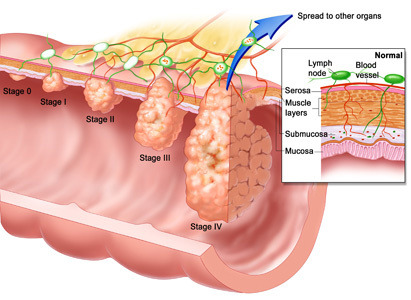
This cancer, like other cancers, is divided into stages, which determine how the disease spreads and how serious it is. Staging is very important for the patient's prognosis and treatment plan. The TNM system generally categorizes the stages of anal cancer: tumor size (T), lymph node status (N), and presence of metastases (M). Here are the stages of anal cancer:
Stage 0 (Carcinoma in situ): In this stage, cancer is found only in the cells on the inner surface of the anus and does not spread to deeper tissues. The simplest stage to treat is "carcinoma in situ".
Stage I: Cancer has spread beyond the cells on the inner surface of the anus and is limited to a tumor smaller than 2 centimeters. The cancer has not yet spread to lymph nodes or distant organs. Tumor removal is usually performed surgically during treatment and the results are expected to be quite positive.
Stage II: In this stage, the tumor is larger than 2 centimeters but has not yet spread to lymph nodes or other distant organs. The size of the tumor determines the need for additional treatments such as radiotherapy and chemotherapy. Cancer size and response to treatment determine prognosis after treatment.
Stage III: Although the cancer has spread to the lymph nodes around the anus, it has not metastasized to distant organs. This stage requires more aggressive treatment and an approach that includes a combination of surgery, radiotherapy, and chemotherapy may be used. Treatment is more complex and prognosis varies depending on the amount of lymph node involvement.
Stage IV: Cancer has metastasized to distant organs. The liver, lungs, or other organs may be damaged. A combination of palliative care, chemotherapy and radiotherapy may be used as treatment, aiming to control the cancer and relieve symptoms. Treatment at this stage aims to slow the spread of the disease and improve people's quality of life.
How to Protect from Anal Cancer?
Several important precautions can be taken. Protecting from Human Papilloma Virus (HPV) infection is vital, first of all, to protect from breast cancer. Most cases are caused by HPV. HPV vaccine is one of the most effective ways to protect against anal cancer. The HPV vaccine is recommended for both men and women and generally works best when administered before sexual activity begins.
Avoiding sexually transmitted diseases may also reduce the risk of anal cancer. It may be helpful to use condoms to prevent the spread of HPV and other sexually transmitted infections. Additionally, reducing the number of sexual partners may reduce the risk of infection.
Avoiding smoking is also vital. Smoking increases the risk of many types of cancer, such as anal cancer. It is very important to quit smoking both for general health and to reduce the risk of cancer. Getting support to quit smoking can help you in this process.
Strengthening the immune system may also be beneficial. Healthy nutrition, regular exercise and adequate sleep are necessary to strengthen the immune system. Additionally, it is important to protect yourself from diseases and conditions that can weaken the immune system.
In early diagnosis, regular medical check-ups and early recognition of symptoms are very important. It is very important to see your doctor if you notice any abnormalities in the anus area, such as bleeding, itching, pain, or signs of anal cancer such as a lump sensation. The progression of the disease and the success of the treatment are possible with earlier diagnosis of the disease.
At What Age Can Anal Cancer Occur?
Anal cancer is more common in people aged 50 and over. However, it does not mean that only older people are at risk. It can also be seen at any age. People with risk factors are likely to develop anal cancer even at a young age.
Those who are not protected against sexually transmitted diseases, those with weak immune systems, smokers and those with HPV infection may be at risk of anal cancer at a young age. Therefore, regardless of age, it is very important for people with risk factors to be careful and have regular check-ups.
The risk increases as you get older. In people aged 50 and over, accumulated damage to cell DNA and weakening of the immune system may facilitate the development of anal cancer. However, preventive measures and regular medical check-ups at an early age may be useful in reducing this risk.
When Does Anal Wart Cause Cancer?
Human Papilloma Virus (HPV) infections usually cause anal warts and usually do not develop into anal cancer. However, anal warts left untreated for a long time or recurring repeatedly may increase the risk of anal cancer. Being infected with high-risk types of HPV increases this risk.
High-risk types of HPV can cause changes in cell DNA, leading to abnormal cell growth and cancer. This process can take years, and the likelihood of warts turning into cancer may vary depending on the individual's immune system, smoking and other risk factors.
HPV infection can be more aggressive, and the risk of warts turning into cancer increases in people with weakened immune systems. This group includes those who are HIV positive and those who use immunosuppressive drugs. Smoking can increase the risk of warts turning into cancer by accelerating cellular changes.
What Causes a Mass in the Anus?
Hemorrhoids, anal fissures, abscesses, anal warts and, less commonly, tumors are the most common causes.
One of the most common causes of mass formation in the anus is hemorrhoids. Hemorrhoids occur when the veins of the rectum and anus swell. These masses can sometimes be painful and cause bleeding. Hemorrhoids can be a result of prolonged constipation, excessive straining, and sitting for long periods of time.
Small tears in the inner surface of the anus are known as anal fissures. These tears are usually very painful and bleeding during defecation. During the healing process, fissures may be felt as small masses or hardened tissue.
Anal abscesses are inflamed masses that form around the anus due to infection. These abscesses show symptoms such as swelling, redness, pain, and sometimes fever. If abscesses are left untreated, a fistula can form, a complication that creates a hole in the skin around the anus.
Small, cauliflower-like masses form due to HPV infection. These warts are usually painless but can cause discomfort and itching. Medical evaluation of anal warts is important because some types of HPV are cancerous.
Generally, the cause of masses in the anus may be tumors. These tumors can be malignant (malignant) or benign. Especially malignant tumors may not show symptoms in the early stages, so regular check-ups and early diagnosis are very important. Bleeding, pain, itching and the feeling of a mass in the anus are symptoms of anal cancer.
References
- [1] WHO - Cervical pre-cancer screening guideline- Current guidance for HPV DNA-based screening and management of cervical precancer.
- [2] ACOG - Screening for Cervical Cancer- Clinical guidance on cervical cancer screening options by age and risk status.
- [3] CDC - HPV and Cervical Cancer Screening- Patient information source about Pap test, HPV test and regular screening.