





Cervical Insufficiency (Cerclage)
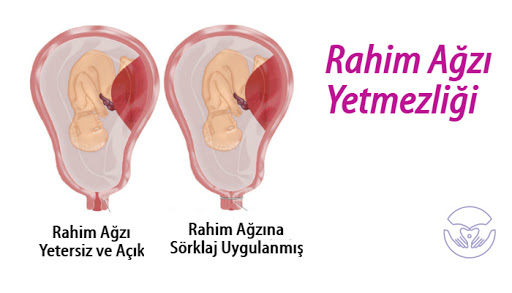
The cervix normally remains closed, long and durable throughout pregnancy. As the time of birth approaches, it softens, becomes thinner and opens. In cervical insufficiency, this process may start earlier than expected. For this reason, regular pregnancy follow-up, questioning the risk history and measuring cervical length with transvaginal ultrasound when necessary are important.
The risk is evaluated more closely, especially in expectant mothers who have previously experienced second trimester loss, have a history of unexplained premature birth, have had a surgical procedure on the cervix, or have a short cervix in the current pregnancy. Assoc. Dr. Early recognition of this risk group in the pregnancy follow-ups carried out by Nazlı Korkmaz is of great importance in terms of protecting the pregnancy.
What is Cervical Insufficiency?
For this reason, the concepts of "cervical shortening during pregnancy" and "cervical insufficiency" are often evaluated together. However, a short cervix alone does not always mean a diagnosis of cervical insufficiency. Gestational age, previous pregnancy history, cervix length, presence of painless dilatation and signs of infection should be interpreted together.
In cervical screening, Pap smear and HPV-based tests help detect precancerous cellular changes at an early stage [1][3].
If there is no significant risk history in the first pregnancy, the diagnosis may sometimes not be made easily. The problem may be noticed by seeing a decrease in the length of the cervix during ultrasound follow-up or, unfortunately, after pregnancy loss. For this reason, conscious follow-up from the early weeks is very valuable in high-risk pregnancies.
What Causes Cervical Insufficiency?
There is no single cause of cervical insufficiency. In some women, the cervical tissue may be structurally weaker. In some cases, previous birth traumas, surgical procedures applied to the cervix, conization or LEEP-like interventions, injuries to the cervix or congenital structural differences may increase the risk.
Screening frequency and follow-up plan; should be determined based on age, HPV status, previous test results, and personal risk factors [2][3].
Conditions that may increase the risk of cervical insufficiency include:
- Previous second trimester pregnancy loss
- History of unexplained premature birth
- Painless cervical dilation in previous pregnancy
- LEEP, conization or similar surgical procedures for the cervix
- Developed trauma to the cervix during birth or procedure
- Congenital uterine or cervical structural differences
- Detection of short cervix in current pregnancy
However, cervical insufficiency may also develop in pregnant women without risk factors. Therefore, just looking at the backstory is not enough. The situation should be evaluated carefully, especially when a feeling of downward pressure, light spotting, a significant increase in vaginal discharge, or a decrease in cervical length is detected by ultrasound during pregnancy.
What are the symptoms of cervical insufficiency?
Cervical insufficiency can often progress silently. Some women may have no symptoms and the problem may only be revealed during an ultrasound check. When there are symptoms, the complaints are usually mild and vague.
An abnormal test result alone does not mean cancer; Depending on the type of result, repeat testing, colposcopy, or close follow-up may be required [2].
Symptoms that may be seen in cervical insufficiency are:
- Feeling of downward pressure in the pelvic area
- Mild vaginal spotting
- Increased vaginal discharge or change in consistency
- Mild cramping in the lower abdomen
- lower back pain
- A feeling of fullness or pressure in the vagina
- Water breaking or premature rupture of membranes
Article Summary
The issue of Cervical Insufficiency (Cerclage) should be addressed by evaluating the person's complaints, examination findings and needs together. In this article, the basic points about Cervical Insufficiency (Cerclage), the diagnosis-treatment process and things to consider are summarized.
What Will You Find in This Article?
- What is Cervical Insufficiency?:This section explains basic information on the subject, the evaluation process and points to consider.
- What Causes Cervical Insufficiency?:This section explains basic information on the subject, the evaluation process and points to consider.
- What are the symptoms of cervical insufficiency?:This section explains basic information on the subject, the evaluation process and points to consider.
- How is Cervical Insufficiency Diagnosed?:This section explains basic information on the subject, the evaluation process and points to consider.
How is Cervical Insufficiency Diagnosed?
One of the most important tools in the diagnosis of cervical insufficiencytransvaginal ultrasoundIt is the measurement of cervical length. With this method, the length of the cervix is evaluated, whether there is a shortening or not, and when necessary, the tendency to open the cervical canal can be observed.
In HPV-related cases, vaccination, screening and follow-up examination are considered as preventive health steps that complement each other [1][3].
It may be useful to monitor cervical length at regular intervals from the 16th to the 24th week, especially in high-risk pregnancies. A cervical length of 25 mm or less before the 24th week of pregnancy is considered important in terms of the risk of premature birth.
Diagnosis is not just a single ultrasound measurement; The patient's previous pregnancy history, current week of pregnancy, whether there is cervical dilatation, the condition of the membranes, signs of infection and symptoms are evaluated together. If necessary, a pelvic examination can also be added to the diagnostic process.
Why is Cervical Length Important During Pregnancy?
Cervical length during pregnancy is one of the important indicators in assessing the risk of premature birth. The risk of premature birth may increase as the cervix becomes shorter. For this reason, serial measurements may be required instead of a single check-up in pregnant women in the risk group.
Evaluation of cervical length should not be seen only as numerical data. The appearance of the cervix, its tendency to dilate, the gestational age, the presence of multiple pregnancy, and the patient's previous pregnancy history should be considered together.
In short, cervical measurement alone is not a definitive result that determines fate; It is a powerful tool that guides the clinical decision process. The measurement result must be interpreted within the general picture of the pregnancy.
How to Plan Cervical Insufficiency Treatment?
Treatment of cervical insufficiency is not the same for every pregnant woman. Treatment plan; It is determined according to the gestational age, cervical length, previous pregnancy losses, history of premature birth, whether the current pregnancy is dilated or not, and the presence of multiple pregnancy.
While only close ultrasound monitoring may be sufficient in some patients, vaginal progesterone treatment may be a more appropriate option in some patients, and cervical stitching, i.e. cerclage, may be a more appropriate option in some patients. The goal is not just to keep the cervix closed; It is to ensure that the pregnancy reaches as safe weeks as possible.
Assoc. Dr. In the personal pregnancy follow-up planned with Nazlı Korkmaz, the risk of cervical insufficiency is not only determined by an ultrasound result; All history and current findings are evaluated together.
When to Use Progesterone Therapy?
progesteroneIt is one of the treatment options that can help reduce the risk of premature birth in some pregnant women with a short cervix. SMFM indicates that vaginal progesterone is an important option in singleton pregnancies with a short cervix, depending on the patient's history.
Progesterone treatment is not automatically given to every pregnant woman. The degree of short cervix, gestational age, previous pregnancy history, single or multiple pregnancy status and the current clinical picture are evaluated together.
Progesterone should not be considered as a process that completely “eliminates” cervical insufficiency. More accurately, it is a medical approach that can support pregnancy preservation in suitable patients. The method of use, dose and duration must be determined by the physician.
What is Cerclage and When is it Done?
Cerclage can be applied to some pregnant women, especially those who have a strong history of cervical insufficiency, whose cervix begins to dilate early, or who are at high risk due to a short cervix.
Situations where cerclage can be applied are generally as follows:
- Previous history of painless second trimester pregnancy loss
- Premature birth or loss due to cervical insufficiency in a previous pregnancy
- Significant cervical shortening detected in ultrasound follow-up
- On examination, the cervix begins to open
- Selected high risk pregnancies
What are the Types of Cerclage?
The most commonly used method in the treatment of cervical insufficiencytransvaginal cerclageis. This procedure is performed vaginally and is the most commonly used approach.
In some special casestransabdominal cerclageconceivable. This method may be considered especially if vaginal cerclage has failed before or if cerclage cannot be performed vaginally due to anatomical reasons. Which method is appropriate is determined according to the patient's history, cervix structure and previous pregnancy results.
Cerclage is not suitable for every pregnant woman. The procedure may not be safe in cases of active bleeding, significant infection, ruptured membranes, onset of labor, or some multiple pregnancies. Therefore, the decision for cerclage should be made in a selected patient group, at the right time and with expert evaluation.
What is the Post-Cerclage Process?
Pregnancy monitoring continues after cerclage. Having stitches placed does not mean that the risk is completely eliminated. Cervical findings, infection symptoms, contraction complaints and the general course of pregnancy should be monitored.
Mild spotting, cramping, or short-term discomfort may occur after cerclage. However, the following symptoms require immediate evaluation:
- Severe abdominal or groin pain
- Heavy vaginal bleeding
- water breaking
- foul-smelling discharge
- Fever or chills
- regular contractions
- Significant decrease in baby's movements
Stitching most often happens in the last weeks of pregnancy, usually around 36-37. It is removed around the week or earlier if labor begins earlier. The exact timing is determined by the gestational age, birth plan and the mother's clinical condition.
Is Bed Rest Necessary?
Although widely recommended in society, complete bed rest has not been shown to definitively prevent pregnancy loss or premature birth. Even long periods of inactivity; It can cause problems such as muscle loss, risk of clots, psychological strain and decrease in daily quality of life.
For this reason, it is not right to automatically recommend every patient to "lie down all the time." If movement restriction is required, its scope should be determined individually. Some pregnant women may be advised to avoid heavy lifting, standing for long periods of time, or intense physical activity; However, this decision must be made with a physician's evaluation.
Why is Follow-up Important in Cervical Insufficiency?
One of the most important topics in cervical insufficiency is regular follow-up and correct timing. Because cervical changes detected early may offer the chance of more effective intervention in the appropriate patient. On the other hand, delayed opening may limit treatment options, especially if the membranes have sagged downwards.
Control intervals in high-risk pregnant women; It should be planned according to the gestational age, previous pregnancy history, cervix length and current complaints. Transvaginal ultrasound measurements, examination findings and the patient's symptoms should be evaluated together.
| Review Title | What Does It Mean? | Possible Approach |
|---|---|---|
| Previous second trimester loss | Strong risk history for cervical insufficiency | Close follow-up in the early weeks and protective cerclage evaluation in appropriate patients |
| short cervix before 24 weeks | May indicate an increased risk of premature birth | Transvaginal ultrasound follow-up, progesterone or cerclage evaluation in appropriate patients |
| Painless cervical opening | May suggest cervical insufficiency | Urgent evaluation according to gestational age and clinical situation |
| Previous surgery to the cervix | It may cause weakness in the cervical support tissue | Risk-based pregnancy monitoring and cervix length monitoring |
| multiple pregnancy | The risk of premature birth is generally high | Follow-up is done more carefully; The decision for cerclage is not considered routine, but in selected cases. |
The approach headings in the table are for general information purposes. The final decision is made by evaluating the current ultrasound findings, gestational age, previous pregnancy history and clinical condition for each pregnant woman.
Frequently Asked Questions About Cervical Insufficiency
It may not always cause symptoms. When symptoms occur, they may include light spotting, a feeling of pelvic pressure, mild cramping in the lower abdomen, lower back pain, and changes in vaginal discharge.
One of the most important evaluation methods is measuring cervical length with transvaginal ultrasound. When necessary, a pelvic examination and detailed pregnancy history are also evaluated.
No. A short cervix can be an important risk indicator; However, this alone does not always mean a diagnosis of cervical insufficiency. The measurement result should be interpreted together with the gestational age, history and other findings.
Cerclage; It can be considered in cases with a previous history of second trimester loss or premature birth, whose cervix begins to dilate early, or in selected cases of short cervix.
The seam is most often 36-37. It is taken around a week. It may need to be removed earlier if labor begins earlier or if medical necessity arises.
In appropriate patients, especially in some singleton pregnancies with a short cervix, vaginal progesterone may help reduce the risk of preterm birth. However, it is not recommended in the same way for every pregnant woman.
Routine complete bed rest has not been shown to definitively prevent pregnancy loss or premature birth. If movement restriction is required, its scope should be determined individually.
Cerclage is not always routinely recommended in multiple pregnancies. It may be considered in some special cases; but the decision must be made on an individual basis.
Yes. In cases that are detected early and followed up appropriately, it may be possible to safely carry the pregnancy to later weeks. The most important point is regular control and timely intervention.
References
- [1] WHO - Cervical pre-cancer screening guideline- Current guidance for HPV DNA-based screening and management of cervical precancer.
- [2] ACOG - Screening for Cervical Cancer- Clinical guidance on cervical cancer screening options by age and risk status.
- [3] CDC - HPV and Cervical Cancer Screening- Patient information source about Pap test, HPV test and regular screening.