





Vaginal Culture Test: Preparation and Results
What does a vaginal culture test look for?
A vaginal culture test involves culturing and investigating specific microorganisms in a sample taken from the vagina. It can be used in appropriate situations to evaluate discharge, itching, or recurring symptoms. However, a vaginal culture alone is not a complete screening test for all genital infections. The specific pathogen the test is intended to target, the source of the sample, and the methods used by the laboratory determine the meaning of the result. Making treatment decisions based solely on the name of the microorganism in the report without examination findings may not be accurate.
The vagina is normally an environment where various microorganisms are present. Therefore, the detection of a microorganism does not always mean that it is causing disease. For example, the detection of Candida in an asymptomatic person is not the same as the detection of Candida accompanied by itching and physical examination findings. The culture result should be interpreted in conjunction with the clinical picture. ( CDC, Testing and Diagnosis for Candidiasis ) The purpose of ordering the test is not to initiate unnecessary treatment, but to find a more accurate answer to the existing question.
When is a culture requested for vaginal discharge?
The need for culture is determined by the nature of the complaint and the initial assessment. It may be useful in cases of suspected recurrent or persistent fungal infections despite treatment, in some complex cases, and when more detailed identification of the causative agent is needed. Culture is not necessary for every discharge. Microscopic examination, pH measurement, or different molecular tests may provide more relevant information in other situations. Since the history alone may not be sufficient to determine the correct cause, physical examination and selection of appropriate tests are considered together. (CDC, Vulvovaginal Symptoms)
The individual should describe not only the color of the discharge, but also how long it has been present and what symptoms it is accompanied by. Odor, itching on the outer skin, burning during urination, or pain during intercourse should be mentioned separately. General information about the causes of vaginal discharge can help prepare for the consultation. However, instead of requesting a pre-selected test kit from the internet, it is more helpful to clarify which specific problem is being investigated. For example, a previous treatment being completely ineffective does not necessarily have to be evaluated in the same way as a short period of improvement followed by recurrence.
Are vaginal culture and vaginal swab the same thing?
A swab describes the method of sample collection; culture, on the other hand, is one of the laboratory methods that can be applied to the sample. Samples that appear to have been taken with the same type of swab may be sent for different examinations. One sample may be evaluated under a microscope while another is used for culture or PCR. Therefore, stating that a swab was taken does not mean that all microorganisms have been investigated. The name of the examination and the type of sample stated on the request form are important for understanding the result.
During the consultation, it's possible to ask which test the sample will be used for. Taking multiple samples doesn't necessarily indicate a more serious illness; different methods may require different transport conditions. Conversely, there are systems that allow multiple tests with a single sample. The laboratory's procedures and the method to be used are determining factors. It is not appropriate for the individual to transfer or store the sample in another container on their own. If the healthcare facility requires the patient to deliver the sample, the transport and processing instructions should be clearly understood.
Differences between culture, microscopy, and PCR.
Microscopic examination aims to directly visualize cells and certain microorganisms in the sample. Culture investigates whether growth occurs under suitable conditions. PCR and other nucleic acid tests detect the genetic material of the targeted microorganism. These methods are not the same, and a negative result for one does not rule out all other possibilities. Which method is useful depends on the pathogen being investigated. (MedlinePlus, Vaginitis test; CDC, Trichomoniasis)
| Examination | The question he answered and the limit |
|---|---|
| Microscopic examination | Are there any visible cells or microorganisms in the sample? Not every pathogen may be visible. |
| Culture | Do specific microorganisms grow under the desired conditions? This does not include all viruses or infections. |
| PCR or NAAT | Does the genetic material of the factor targeted by the test exist? Only the targets in the panel are evaluated. |
| Antimicrobial susceptibility | How does a suitable isolate respond in the laboratory to specific drugs? It doesn't create a prescription on its own. |
| Vaginal pH | What is the acidity level of the environment? This alone does not provide a definitive diagnosis. |
Choosing the broadest method from the table doesn't always mean the best assessment. The appropriate test is the one that answers the specific clinical question. Unnecessarily broad screenings can lead to incidental findings and misinterpretations. Increasing the number of tests without knowing how the results will be used may not meet the individual's needs.
How is a vaginal culture test taken?
A sample is usually taken from vaginal discharge during examination using a sterile swab. If necessary, a speculum is used to gently separate the vaginal walls and provide visualization. It is important that the sample is taken from the correct area and placed in the appropriate transport medium. Which area is sampled may depend on whether a vaginal complaint or a cervical problem is being investigated. The purpose and steps of the procedure should be explained beforehand. (MedlinePlus)
The patient can express any discomfort during the examination and request a break. It is helpful to report any previous painful experiences, vaginal dryness, or involuntary muscle contractions. Although sample collection is a brief procedure, everyone's experience is different. The healthcare team should determine the appropriate method based on the individual's circumstances. Once the procedure is complete, the patient can ask what was examined and how the results will be obtained. This ensures that the sample is understood to be part of the evaluation process, rather than simply a routine procedure.
Does a vaginal culture test hurt, and will there be bleeding?
Mild discomfort may occur during swab collection. If pain is present, it should be evaluated along with factors such as inflamed or tender tissue, dryness, or muscle contractions related to the examination. It is not accurate to say that the procedure will be completely painless for everyone. If significant pain is felt, a healthcare professional should be informed instead of silently enduring it. It is important to adjust the speed and method of the examination according to the individual's tolerance.
A culture sample is not a tissue biopsy; the goal is to collect a sample of discharge, not to remove a small piece of tissue. If unexpected or persistent bleeding occurs after the procedure, a healthcare provider should be contacted. In particular, the fact that pre-existing bleeding is noticed after the sample collection does not automatically mean the test is the cause. The duration and intensity of pain, the amount of bleeding, and any accompanying symptoms should be described. Conditions such as vaginal dryness associated with menopause can also be considered when planning the examination.
Use of medications and products prior to vaginal culture
Antibiotics, antifungal medications, and vaginal products can affect the results of some tests. It is important to inform the doctor of any products being used when scheduling an appointment and to obtain preparation instructions from the testing facility. There is no single effective medication discontinuation period for every test. It is not advisable to stop a prescription medication on your own or to randomly start a new product before the test. Preparation is planned considering both current treatment and the purpose of the test. (CDC, Vulvovaginal Symptoms; MedlinePlus)
Washing the inside of the vagina to make the test appear clean is incorrect. Vaginal douching can alter the natural environment and cause irritation. Normal external genital hygiene may suffice when coming to the appointment; no special cleansers or perfumes are necessary. If you don't remember the name of the medication you used, you can bring the prescription or packaging information. It is also helpful to state the approximate expiration date. The important thing is not to appear perfectly prepared, but to openly share information that may affect the interpretation of the results.
Can a vaginal culture be taken during menstruation?
Menstrual bleeding, the planned examination, and the urgency of the complaint are all assessed together. In some cases, choosing a different day may be appropriate; in others, the assessment should not be postponed. It is not correct to set a strict rule that tests cannot be taken before the end of menstruation for all patients. The bleeding status and the planned test should be reported to the healthcare facility before the appointment. Preparations regarding sexual intercourse and the use of vaginal medications or products can also be clarified during the same consultation.
Individuals should not delay getting tested solely due to significant symptoms. If there is fever, significant lower abdominal pain, or pain or bleeding during pregnancy, clinical evaluation should take priority. Choosing the appropriate day for testing should not lead to overlooking emergencies. On the other hand, if symptoms have persisted for a long time, the physician may suggest a more suitable time in terms of sample quality. Instead of canceling the appointment on your own, providing brief information and seeking guidance can prevent unnecessary delays and inappropriate sample collection.
How many days does it take to get the results of a vaginal culture?
The time it takes to get results varies depending on the microorganism being investigated, the method used, and the laboratory's workflow. Some results may be ready within a few days; it may take longer if additional identification or susceptibility testing is required. The timeframe given by one center is not guaranteed by another. The most accurate time estimate can be obtained from the laboratory that analyzed the sample or the healthcare organization that requested the test. (CDC, Testing and Diagnosis for Candidiasis)
It is also important whether the report is a preliminary or a final result. Information displayed on the initial screen may change or be detailed before further examinations are completed. If symptoms worsen while waiting for the results, there is no need to wait for the laboratory results to be finalized. The individual should know at the time of application when to contact them again. It should also be clear whether the results will be evaluated by phone, online, or in a follow-up appointment. The fact that the report has been viewed and interpreted by the physician are different stages.
What does it mean to have bacterial growth in a vaginal culture?
Growth is the detection of a microorganism multiplying under laboratory conditions. The relationship of this finding to the disease is evaluated in conjunction with symptoms, physical examination, and the area from which the sample was taken. Some microorganisms can be found without causing symptoms; this is called colonization. A positive result does not always mean that antibiotics are necessary. Especially when a fungal infection is detected, automatic treatment decisions should not be made without the patient's complaints and clinical findings. (CDC, Vulvovaginal Candidiasis)
When reading the results, it's helpful to understand the scope of the test as well as the name of the microorganism. Terms like "normal flora," "mixed growth," or the name of a specific agent can have different meanings. It's not accurate to translate these words into disease severity solely through internet searches. You can ask your doctor whether this finding explains your symptoms and what follow-up is necessary if treatment is not given. Requesting a repeat sample doesn't necessarily mean the initial laboratory worked incorrectly; new information may be needed to more accurately answer the clinical question.
If vaginal culture is negative but itching persists
A negative result indicates that the causative agent was not detected under the conditions of the requested examination. It does not mean that all infections or other diseases are ruled out. The sampling conditions, recently used medications, and the agents covered by the test can be reviewed. Additionally, irritation, hormonal changes, and skin diseases can also cause itching or burning. Treatment is planned according to the cause of the complaint, not just the negative test result. (NHS, Vaginitis)
When describing persistent symptoms, it's important to distinguish whether the pain is felt on the outer skin or inside the vagina. Conditions such as lichen sclerosus may be considered if there are white areas, cracks, or thickening of the skin. If the pain is significant and long-lasting, vulvodynia and chronic genital pain may be considered separately. These connections do not mean that everyone with a negative culture has these conditions; they indicate that the scope of evaluation may be broader than just infection.
The role of culture in recurrent vaginal yeast infections.
In cases of suspected recurrent or complicated vaginal yeast infections, culture can help confirm the diagnosis and identify the Candida species. Not all yeast infections are the same. If symptoms persist despite treatment, sensitivity testing may also be considered in appropriate patients. Conversely, assuming every itching episode is due to a yeast infection and repeatedly using medication may overlook a different cause. ( CDC, Vulvovaginal Candidiasis )
Bringing all previous cultures to the follow-up appointment can help determine if the same pathogen has been detected again. Dates of previous prescriptions and how long relief lasted after treatment are also helpful information. It's more informative to specify whether the itching or discharge persists, rather than simply stating that the medication didn't work. The purpose of the culture isn't to prescribe more medication, but to clarify the diagnosis and treatment goals when necessary. Situations where treatment was ineffective or intolerable are also part of the outcome interpretation.
Can bacterial vaginosis be diagnosed by culture?
Bacterial vaginosis is an imbalance between vaginal microorganisms. Diagnosis can be made using clinical criteria, microscopic evaluation, or appropriate molecular tests. Gardnerella vaginalis culture is not a recommended method for diagnosing bacterial vaginosis due to its low specificity. The growth of a single bacterium does not explain the entire microbiota balance and the patient's symptoms. (CDC, Bacterial Vaginosis)
This distinction is particularly important in cases of recurrent odor and discharge. A person may have seen different lab results at different times; direct comparison becomes difficult if the results were not obtained using the same method. When evaluating treatment for recurrent bacterial vaginosis, it's important to ask which findings led to the diagnosis. Instead of searching for a separate antibiotic for each bacterium found in the culture, it's necessary to focus on the clinical evaluation that best describes the current symptoms. This approach helps reduce unnecessary treatments and misinterpretations of the results.
Does a vaginal culture show all sexually transmitted infections?
No. A routine vaginal culture is not a single comprehensive test for chlamydia, gonorrhea, trichomonas, herpes, HIV, or HPV. Appropriate samples and specialized testing methods may be required for these pathogens. For example, nucleic acid tests play a crucial role in diagnosing chlamydia. The specific pathogens included in a test kit may not be clear from a general name such as a genital infection panel. (CDC, Chlamydial Infections; CDC, Trichomoniasis)
Information such as a new partner, unprotected contact, or a diagnosis of infection in a partner should be shared with a healthcare professional. This information can influence the selection of appropriate testing. A normal culture result should not be considered a guarantee against all sexually transmitted infections. Asking what the test does not cover is just as valuable as asking what it does cover. Partner assessment also varies depending on the pathogen detected; just because there is bacterial growth in a culture does not mean everyone should use the same medication. Personal and partner-related decisions should be made based on confirmed findings.
How is an antibiogram result evaluated?
An antibiogram investigates the susceptibility of a properly isolated microorganism to specific antibiotics under laboratory conditions. Antibiograms are not necessary or possible for every cultured sample. The results can aid in drug selection, but they do not alone determine which drug should be given to an individual. Factors such as the location of the infection, whether the microorganism is truly pathogenic, pregnancy, allergies, and other medications are also considered.
Self-medication with a drug that is labeled "sensitive" in the report is therefore inappropriate. The term "resistant" does not mean the individual is unresponsive to all treatments; it is a laboratory finding for a specific microorganism and a specific drug. During the consultation, you can ask whether the result changed the treatment decision and, if so, why. Comparing the length of lists in different reports to conclude that one laboratory is more comprehensive than another can also be misleading. Methodology and clinical requirements are more important than the format of the report.
Vaginal culture and follow-up after results during pregnancy.
When evaluating vaginal discharge or genital complaints during pregnancy, gestational age and accompanying symptoms are important. Cultures requested due to complaints are not performed for the same purpose as specific pregnancy screenings. Therefore, the name and reason for the test should be clearly understood. Medications to be used during pregnancy are also evaluated; it should not be assumed that a product used for a previous infection will be suitable again. New symptoms should be shared with the healthcare team during pregnancy and childbirth monitoring .
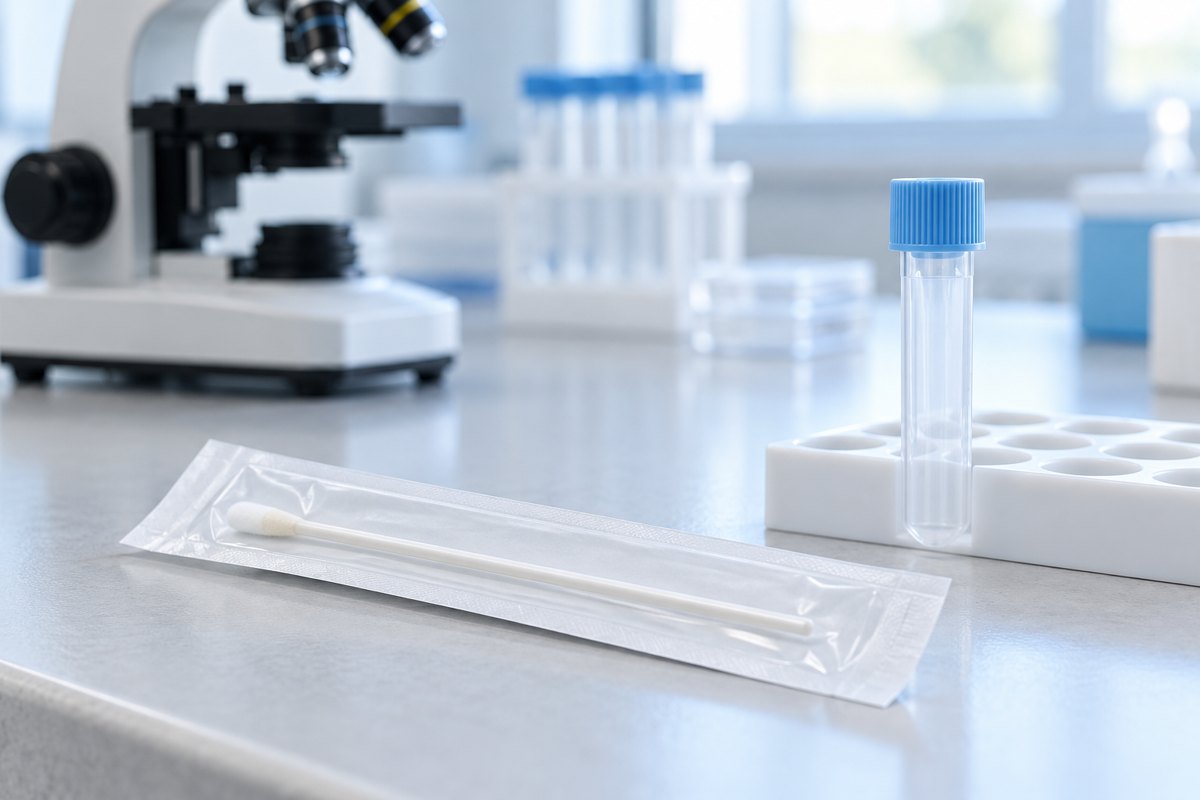
Three questions may be helpful when coming to your follow-up appointment: Do the findings explain my complaint? Is treatment or further investigation necessary? In what situation should I reapply? These questions allow for an understanding of the entire plan without focusing on a single word in the report. You can meet with Assoc. Prof. Dr. Nazlı Korkmaz for evaluation ; appointment information can be found on the contact page . This content does not replace an examination. The visual shows representative laboratory equipment generated by artificial intelligence; it does not include a real patient sample.
Frequently Asked Questions (FAQ)
Is it necessary to be fasting for a vaginal culture?
Fasting is generally not required if only a vaginal sample is to be taken. If other tests are to be performed on the same day, the preparation for those tests should be discussed separately.
If the culture result is positive, is medication absolutely necessary?
No. The relationship between the growing microorganism and the symptoms, as well as the examination findings, are evaluated. Not every positive result means illness or the need for treatment.
Can a vaginal culture show HPV?
Routine vaginal culture is not an HPV test. Appropriate samples and separate tests are used for HPV evaluation.
Should I stop taking my antibiotics before the test?
Do not stop taking it on your own. Clarify the timing of the test with your doctor, stating which medication you are using and when it was last used.
If my vaginal culture is negative, why does the itching persist?
The test may not cover all causes. Irritations, hormonal changes, skin conditions, or other infections may also be evaluated.
Are vaginal culture and a Pap smear the same test?
No. Culture looks for specific microorganisms; a smear is a different test that evaluates cells taken from the cervix.
What should I do if I develop a fever and lower abdominal pain while waiting for the results?
Contact a healthcare provider immediately upon receiving the results. Severe pain, fainting, heavy bleeding, or a significant deterioration in general condition require immediate evaluation.
Will everyone have another culture done after treatment is finished?
No. The need for testing is determined by the identified factor, the course of symptoms, conditions such as pregnancy, and the method used.